
How to Read a Pet Food Label: Ingredients, Guaranteed Analysis and Feeding Guidelines
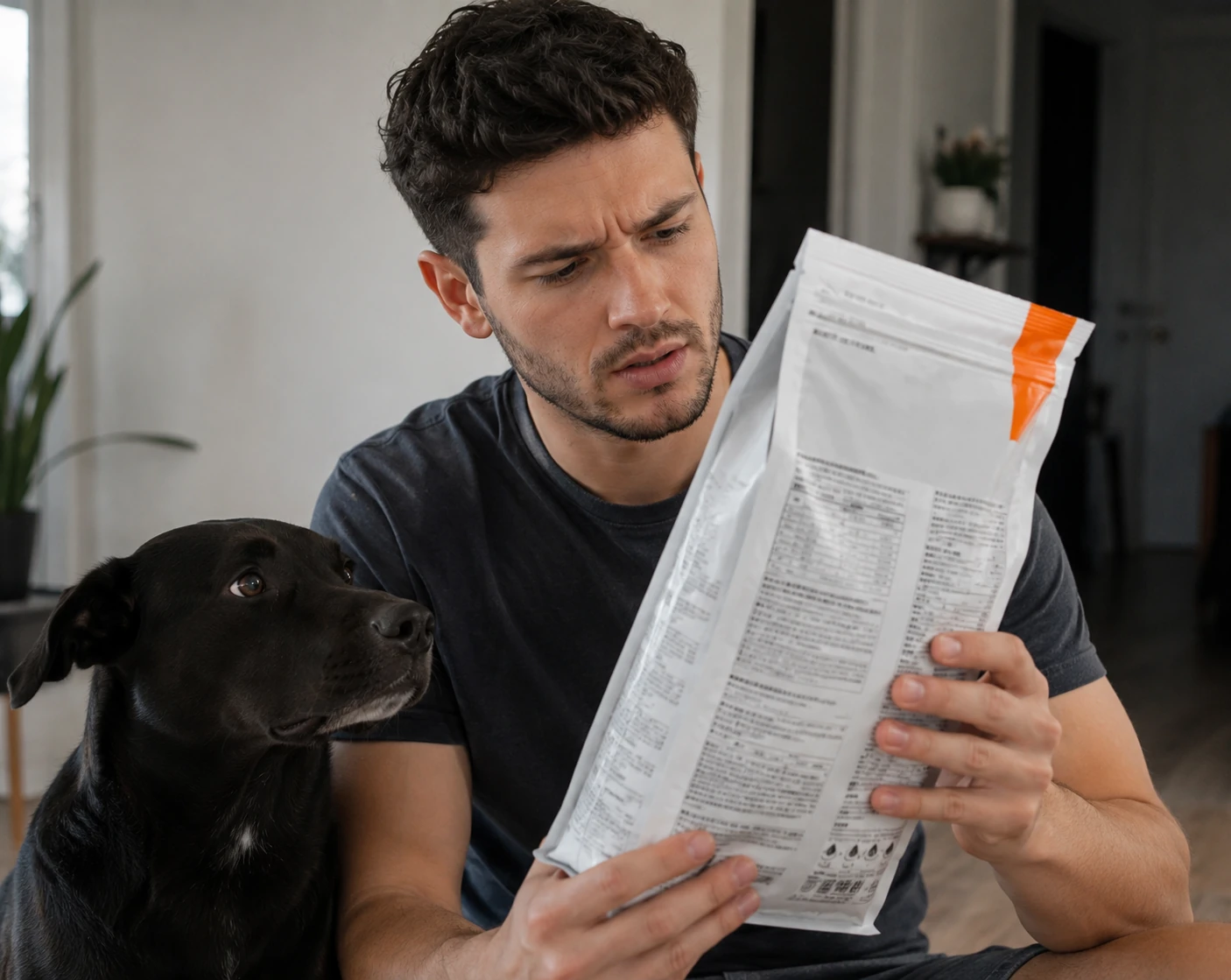
A pet food label contains much more than an attractive product name or a photograph of a healthy dog or cat. When read correctly, it can help pet owners understand what a product is designed for, which ingredients it contains, what nutrients it guarantees, and how much food their pet may need each day.
However, labels can also contain technical language, percentages, marketing terms, and feeding tables that are difficult to interpret. Understanding the most important sections allows pet owners to look beyond packaging design and make more informed decisions.
At Bridge PetCare, we believe that clear product information, nutritional knowledge, and responsible manufacturing help strengthen trust between pet food companies and pet owners.
Why the Pet Food Label Matters
A label should help answer several essential questions:
- Is the food intended for a dog or a cat?
- Is it suitable for the pet’s life stage?
- Is it a complete food or a complementary product?
- Which ingredients are included?
- How much protein, fat, fiber, and moisture does it guarantee?
- How many calories does it provide?
- How much should the pet eat?
- Who manufactured or distributed the product?
- How can the company be contacted?
Label terminology varies between countries. In the United States, consumers commonly see terms such as ingredient statement, guaranteed analysis, and nutritional adequacy statement. In the European Union, similar sections may be described as composition, analytical constituents, and feeding guidelines.
Regardless of the market, the goal is the same: to communicate important information about the product and its appropriate use.
1. Start With the Product Name and Intended Animal
The first step when reading a pet food label is to confirm which animal the product is intended for.
Dog food and cat food are not nutritionally interchangeable. Dogs and cats have different nutrient requirements, so the label should clearly identify the intended species. A picture of a dog or cat should not be the only indication.
Next, identify the product type. Depending on the market, the package may use descriptions such as:
- Complete food for adult dogs
- Complete food for kittens
- Complementary food for cats
- Dog treats
- Cat snacks
- Food for growth
- Food for adult maintenance
- Food for all life stages
The product description is more important than the photograph or flavor name printed on the front.
Complete Food Versus Complementary Food
A complete food is intended to provide all the nutrients a healthy pet requires when it is fed according to the directions and used for the appropriate species and life stage.
A complementary food, treat, snack, or supplement is generally designed to be used alongside a complete diet. It may not provide all essential nutrients in the necessary proportions.
Pet owners should not assume that every can, pouch, freeze-dried product, topper, or treat can be used as the pet’s main daily food.

2. Check the Life Stage
A growing puppy or kitten does not have the same nutritional requirements as an adult or senior pet.
Common life-stage descriptions include:
- Growth
- Adult maintenance
- Gestation and lactation
- All life stages
A food formulated for growth may contain a different concentration and balance of nutrients than a product intended for adult maintenance. Similarly, a highly active animal may have different energy requirements from a less active household pet.
The nutritional adequacy or product-purpose statement should clearly explain which life stage the formula is designed to support. AAFCO describes the nutritional adequacy statement as one of the most important parts of a pet food package because it connects the product with the animal and life stage for which it was formulated.
3. Understand the Pet Food Ingredients List
The ingredients section tells consumers which materials were used to make the product.
Under commonly used U.S. labeling rules, ingredients are listed in descending order according to their weight. This means that the first ingredient contributed more weight to the recipe before processing than the ingredients listed after it. However, the list does not normally reveal the exact quantity of every ingredient.
In European labels, this section is often called Composition, and ingredients may be declared individually or under legally defined ingredient categories.
Does the First Ingredient Determine Food Quality?
The first ingredient provides useful information, but it should not be used as the only measure of quality.
Fresh meat contains a significant amount of water. After processing, its contribution to the finished product may be different from what its initial position suggests. Meanwhile, dried ingredients or meals contain less moisture and may provide a more concentrated source of nutrients.
A responsible evaluation should consider:
- The complete ingredient list
- The nutrient profile
- Protein and fat guarantees
- Calorie density
- Digestibility
- Life-stage suitability
- Quality-control standards
- The expertise behind the formulation
- The pet’s individual response to the food
No individual ingredient can prove that a formula is complete, balanced, safe, or appropriate.
What Are Meat Meals?
A meal is generally a concentrated, rendered ingredient from which much of the water and fat has been removed.
The word “meal” does not automatically mean that an ingredient is poor quality. Its nutritional value depends on the raw materials, processing controls, digestibility, nutrient consistency, and standards used by the manufacturer.
The same principle applies to fresh meat, fish, grains, vegetables, legumes, oils, and supplements: ingredient names should be evaluated as part of the complete formula.
What Are Vitamins, Minerals, and Additives?
Ingredients appearing near the end of the list are usually present in smaller amounts. These may include:
- Vitamins
- Minerals
- Amino acids
- Antioxidants
- Preservatives
- Prebiotics
- Probiotics
- Functional ingredients
- Technological additives
A nutrient can be essential even when only a small quantity is required. Therefore, an ingredient’s position near the end of the list does not mean that it is unimportant.
4. How to Read the Guaranteed Analysis
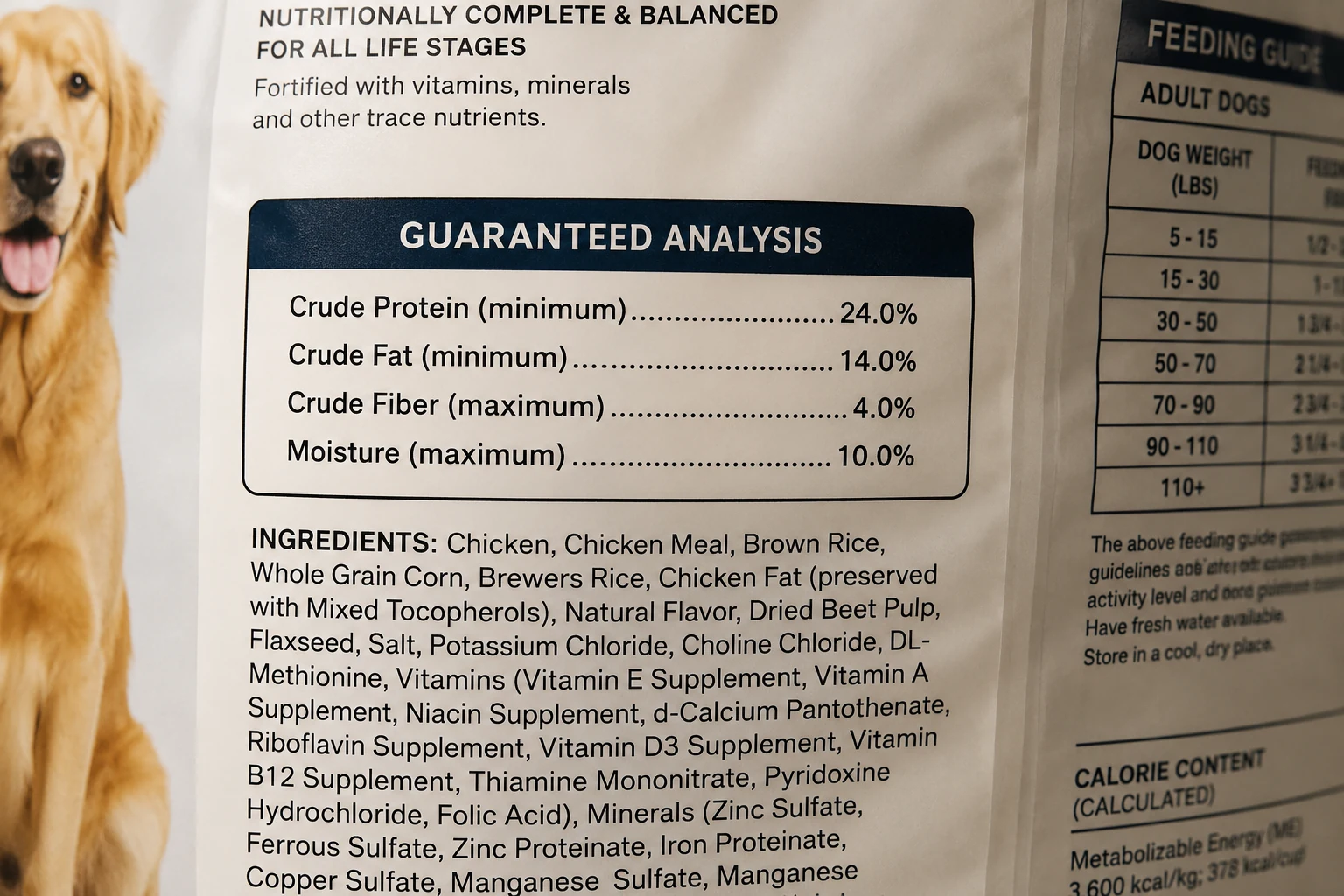
The guaranteed analysis provides declared minimum or maximum levels of selected nutrients.
On a typical U.S. pet food label, the four basic guarantees are:
- Minimum crude protein
- Minimum crude fat
- Maximum crude fiber
- Maximum moisture
Other nutrients may also be shown when they are required, voluntarily guaranteed, or connected to a product claim. These can include calcium, phosphorus, taurine, omega-3 fatty acids, omega-6 fatty acids, glucosamine, or other nutritional components.
What Does “Crude” Mean?
The term crude refers to the laboratory method used to estimate protein, fat, or fiber. It does not mean that the nutrient is raw, unrefined, unsafe, or low quality.
For example:
- Crude protein estimates the total protein content.
- Crude fat estimates the total fat content.
- Crude fiber estimates a portion of the fiber present.
The guaranteed analysis is useful, but it does not provide a complete evaluation of protein quality, amino acid balance, digestibility, or biological value.
Minimum and Maximum Values
The words minimum and maximum are important.
A declaration of:
Crude Protein: 28% minimummeans that the product is guaranteed to contain at least that percentage of crude protein.
A declaration of:
Moisture: 10% maximummeans that the product should not contain more than that declared percentage of moisture.
The guaranteed analysis is not necessarily the exact result of every individual package. It communicates the levels guaranteed by the manufacturer.
5. Do Not Compare Wet and Dry Food Directly
One common mistake is comparing the protein percentage of dry food directly with the protein percentage of wet food.
For example, a dry food might declare:
Crude Protein: 30%
Moisture: 10%
A wet food might declare:
Crude Protein: 10%
Moisture: 78%
The wet food appears to contain much less protein, but most of its weight is water.
Guaranteed analysis values are generally shown on an as-fed basis, meaning moisture is included. To compare foods with very different moisture levels, the nutrients should be converted to a dry-matter basis. The FDA specifically recommends this method when comparing canned and dry products.
Simple Dry-Matter Calculation
Use this formula:
Dry matter percentage = 100 − moisture percentageThen:
Nutrient on a dry-matter basis =
as-fed nutrient percentage ÷ dry matter percentage × 100
For the wet food example:
Dry matter = 100 − 78 = 22%Protein on a dry-matter basis =
10 ÷ 22 × 100 = approximately 45.5%This does not automatically mean that the wet food is better. It simply allows a more accurate comparison between products with different moisture levels.
6. Look for Calorie Information
Protein and fat percentages do not tell pet owners how many calories the food provides.
Calorie content may be expressed as:
- Kilocalories per kilogram
- Kilocalories per cup
- Kilocalories per can
- Kilocalories per pouch
- Kilocalories per piece
Calorie density is important because two foods with similar guaranteed analyses can provide different amounts of energy.
An active working dog, a growing puppy, a senior cat, and a less active adult dog will not necessarily require the same calorie intake.
Pet owners should consider:
- Body weight
- Body condition
- Muscle condition
- Age
- Activity level
- Neutering status
- Health condition
- Environmental temperature
- Treat consumption
Calories from treats, toppers, table food, and supplements should also be considered as part of the total daily intake.
7. How to Use Pet Food Feeding Guidelines
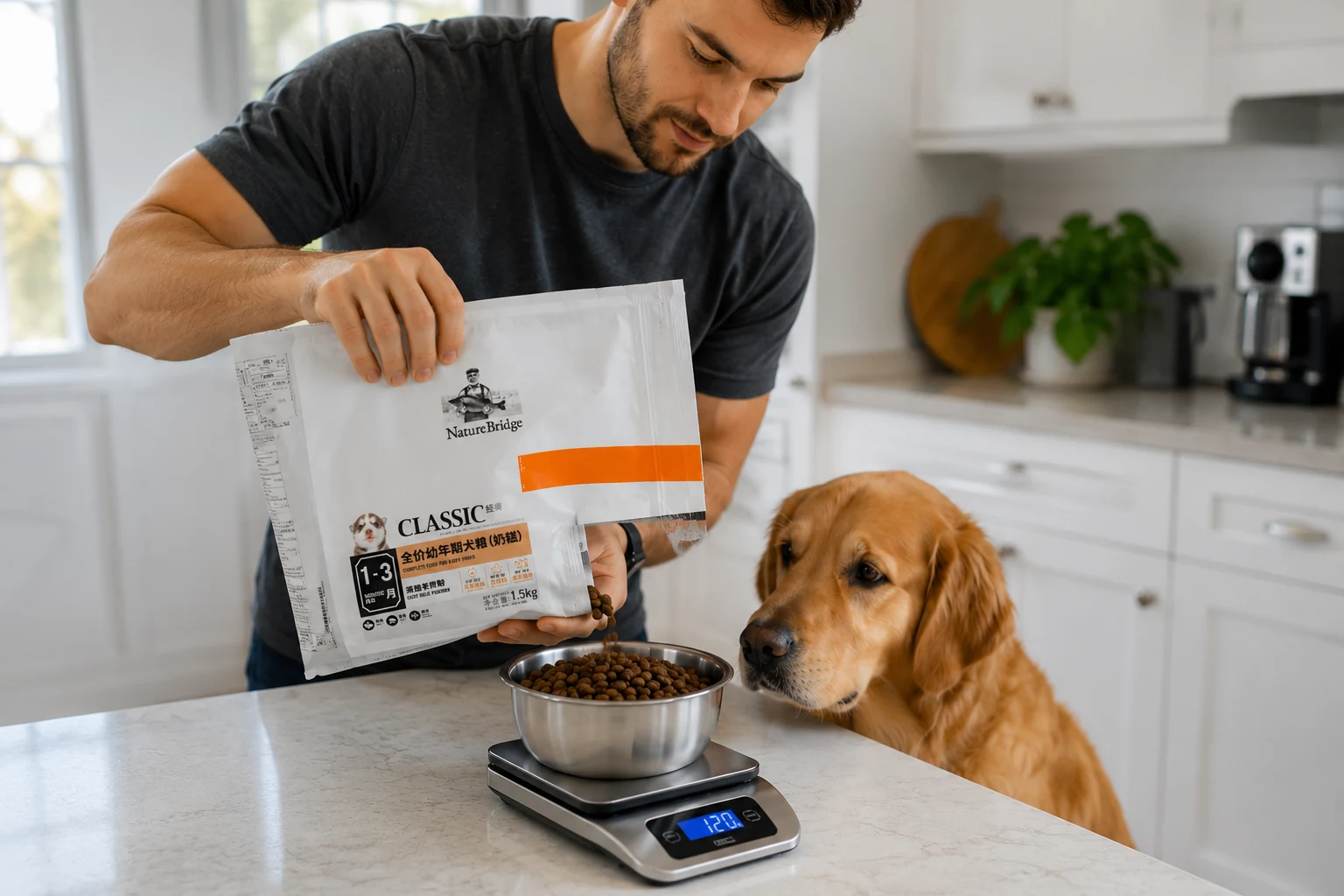
The feeding table provides a suggested daily amount based on factors such as body weight, age, or life stage.
For example, a feeding guide may recommend:
10 kg adult dog: 150–180 grams per dayThis range is a starting point—not a guaranteed prescription for every animal.
AAFCO and FEDIAF both explain that feeding amounts may need to be adjusted according to the individual pet’s activity, weight, and body condition.
How to Apply Feeding Guidelines Correctly
Start with the recommended amount and monitor the pet for several weeks.
Pay attention to:
- Body weight
- Waist definition
- Rib coverage
- Muscle condition
- Appetite
- Stool quality
- Energy level
- Skin and coat
- Exercise performance
Increase or reduce the portion gradually if the pet is gaining or losing inappropriate amounts of weight.
“Per Day” Does Not Mean “Per Meal”
If the feeding table recommends 200 grams per day, that amount should usually be divided between the pet’s daily meals.
For two meals:
200 grams ÷ 2 = 100 grams per mealPet owners should also check whether the quantities are expressed in grams, cups, cans, pouches, or another measurement.
Using a kitchen scale is generally more accurate than estimating portions by eye.
8. Evaluate Marketing Claims Carefully
A pet food label may include terms such as:
- Premium
- Super premium
- Natural
- Holistic
- High protein
- Grain-free
- Functional
- Sensitive
- Fresco
- Human-grade
- Veterinary
- Limited ingredient
These words can help communicate a product’s positioning, but they should not replace objective nutritional information.
WSAVA advises pet owners to distinguish useful label information from marketing language and to investigate the expertise, formulation process, quality control, research, and contact information behind a brand.
When evaluating a claim, ask:
- Is the claim clearly defined?
- Is it supported by the ingredient list or nutrient analysis?
- Does the manufacturer provide more information?
- Is the food appropriate for the pet’s species and life stage?
- Does the claim describe a meaningful nutritional benefit?
- Is veterinary guidance needed?
A product should not be selected solely because one attractive word appears on the package.
9. Check the Manufacturer’s Information
A responsible manufacturer should make it possible for customers to ask questions about its products.
Look for:
- Company name
- Address
- Website
- Telephone number
- Email address
- Batch or lot number
- Best-before date
- Storage instructions
- Country of manufacture or origin, when applicable
The batch code and best-before date are especially important for traceability and product identification.
Pet owners may also ask the company:
- Who formulates the products?
- How are raw materials evaluated?
- What quality-control procedures are used?
- Is the finished product nutritionally analyzed?
- How is microbiological safety monitored?
- What certifications does the facility maintain?
- Where is the food manufactured?
- Can the company provide detailed nutrient information?
10. Look Beyond the Package
The package provides important information, but it cannot communicate every detail about a formula or manufacturer.
A broader evaluation should include:
- Nutritional expertise
- Product research
- Raw-material controls
- Manufacturing consistency
- Laboratory testing
- Food-safety systems
- Packaging controls
- Traceability
- Customer support
- The pet’s real response to the product
At Bridge PetCare, our approach connects formulation, ingredient selection, manufacturing standards, quality control, and international market experience.
Learn more about our story, our philosophy, and international certifications. Pet owners and business partners can also explore our brands and discover the manufacturing capabilities and quality-control systems of the Bridge PetCare factory.

Quick Pet Food Label Checklist
Before choosing a product, confirm the following:
Product Identity
- Is it clearly labeled for dogs or cats?
- Is it a complete food, complementary food, treat, or supplement?
- Is it appropriate for the pet’s life stage?
Ingredients
- Is the ingredient list clearly presented?
- Are the main protein and energy sources identifiable?
- Are there ingredients the pet cannot tolerate?
Nutritional Information
- What are the protein, fat, fiber, and moisture guarantees?
- Is calorie information available?
- Is the product intended to provide complete and balanced nutrition?
Feeding Instructions
- Is there a feeding table?
- Is the recommendation per day or per meal?
- Are the quantities shown in grams, cups, cans, or pouches?
- Does the pet’s body condition indicate that the portion needs adjustment?
Manufacturer Transparency
- Can the company be contacted?
- Is the factory or manufacturer identified?
- Are quality standards and certifications available?
- Can the company provide additional nutritional information?
Final Thoughts
Learning how to read a pet food label helps owners move beyond packaging design and focus on the information that matters most.
The product name identifies the intended animal and food type. The ingredients list explains what was used. The guaranteed analysis provides selected nutrient levels. The calorie declaration helps evaluate energy density, while the feeding guidelines provide a starting point for daily portions.
No single number, ingredient, or marketing claim can determine whether a food is ideal for every pet.
The best choice is a complete and balanced product that matches the animal’s species, life stage, activity level, health status, and individual nutritional needs.
Pet owners should consult a veterinarian or qualified veterinary nutrition professional when an animal has a medical condition, persistent digestive symptoms, unexplained weight changes, allergies, or specialized nutritional requirements.
Bridge PetCare — Connecting Nutritional Knowledge, Responsible Manufacturing, and Better Lives for Pets.