
Grain-Free vs Grain-Inclusive Dog Food: Which Is Right for Your Dog?
Grain-Free vs Grain-Inclusive Dog Food: Which Is Right for Your Dog?
Choosing between grain-free dog food and grain-inclusive dog food can be confusing. Grain-free recipes are often promoted as natural, premium or easier to digest, while traditional formulas may contain rice, oats, barley, corn, wheat or other cereal grains.
However, the presence or absence of grains does not determine the overall quality of a dog food.
A grain-free product is not automatically healthier, and a grain-inclusive formula is not automatically lower quality. What matters most is whether the complete product is nutritionally balanced, appropriate for the dog’s life stage, safely manufactured and suitable for the individual animal.
At Bridge PetCare, we believe pet food should be evaluated through nutritional science, formulation quality, ingredient selection, manufacturing controls and the real needs of dogs—not simply through marketing trends.
What Is Grain-Inclusive Dog Food?
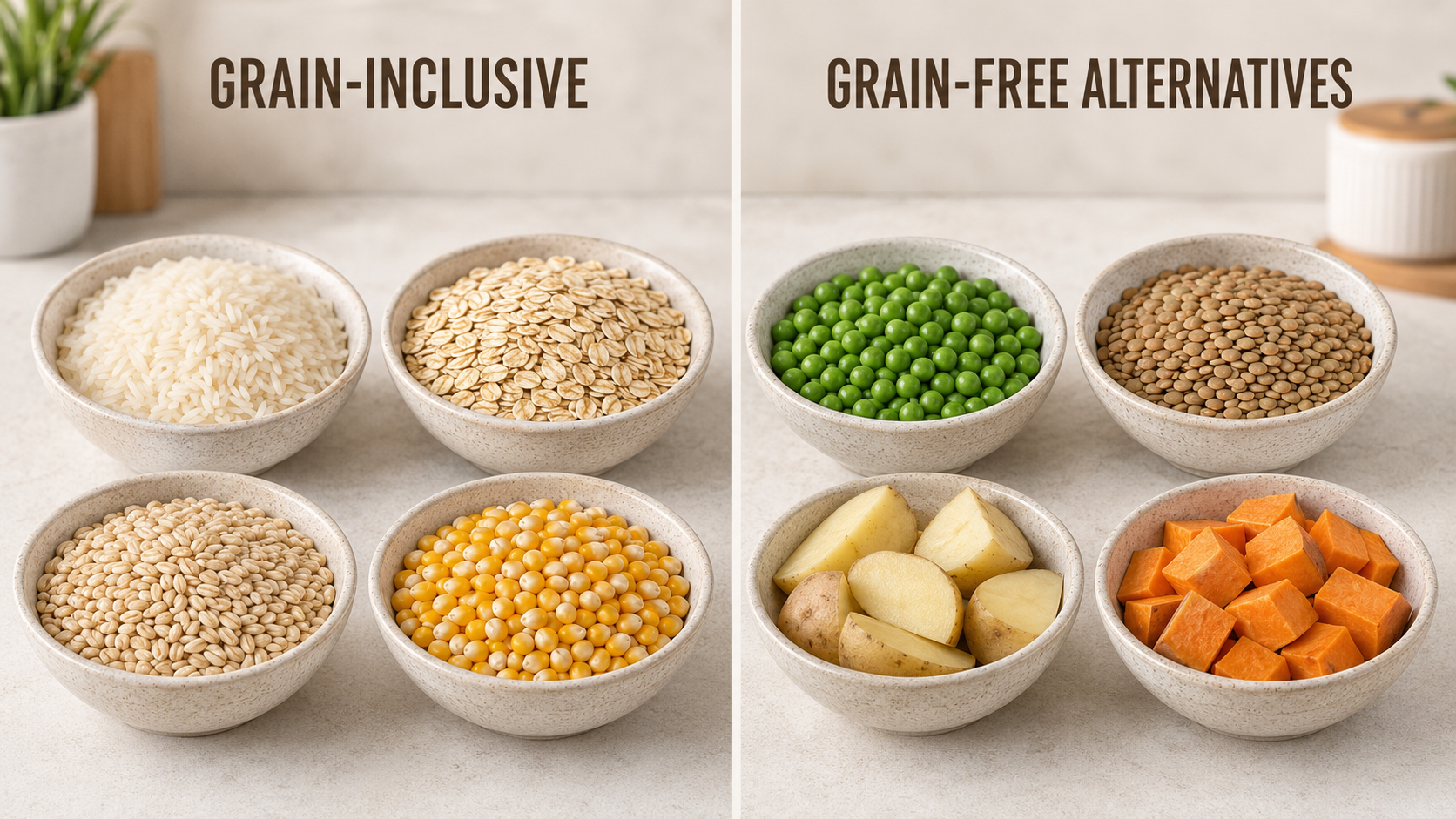
Grain-inclusive dog food contains one or more cereal grains as part of its formulation.
Common grains used in dog food include:
- Rice
- Brown rice
- Oats
- Barley
- Corn
- Wheat
- Sorghum
- Millet
Depending on the ingredient and processing method, grains can provide:
- Digestible starch and energy
- Dietary fibre
- Essential fatty acids
- Vitamins
- Minerals
- Protein
- Texture and structure for dry food
Grains are sometimes described as inexpensive fillers. That description is misleading.
The World Small Animal Veterinary Association explains that ingredients in pet food should have a nutritional or technological purpose. Properly cooked cereal grains can provide energy, fatty acids, vitamins, minerals and fibre, and dogs can digest them when they are correctly processed within a complete and balanced diet.
The quality of a grain-inclusive formula depends on how the ingredients are selected, processed and balanced—not simply on the presence of rice, corn or another grain.
What Is Grain-Free Dog Food?
Grain-free dog food is formulated without traditional cereal grains such as rice, corn, wheat, barley or oats.
However, grain-free does not mean carbohydrate-free.
Most grain-free dry foods still require carbohydrate or starch ingredients for energy, texture and kibble production. Instead of grains, these formulas may use:
- Peas
- Lentils
- Chickpeas
- Beans
- Potatoes
- Sweet potatoes
- Tapioca
- Cassava
- Other legumes or root vegetables
Therefore, the real difference is often not whether the food contains carbohydrates. The difference is which carbohydrate sources are used and how they fit into the overall nutritional formula.
A bag labelled grain-free may contain substantial quantities of peas, lentils or potatoes. Pet owners should examine the complete ingredient list rather than assuming that grain-free means mainly meat.
Grain-Free Does Not Automatically Mean High Protein
Another common misunderstanding is that grain-free products always contain more animal protein.
Removing rice or oats does not guarantee that the manufacturer has added more chicken, beef, fish or lamb. Grains may instead be replaced with legumes, potatoes or plant-protein ingredients.
The guaranteed analysis reports the product’s total crude protein, but it does not automatically tell consumers how much of that protein comes from animal sources and how much comes from plant ingredients.
AAFCO explains that pet food ingredients are listed in descending order by weight, but the label does not disclose the exact quantity of every ingredient. Consumers should therefore evaluate the full formulation rather than judging the product by one ingredient or one percentage.
Are Grains Bad for Dogs?
For most healthy dogs, properly processed grains are not automatically harmful.
Dogs can obtain energy and nutrients from cooked grains when those ingredients are included in an appropriate, complete and balanced formula. WSAVA states that cereal grains can provide starch, fibre, fatty acids, vitamins and minerals and that properly cooked grains can be digested by dogs.
This does not mean every grain-containing product is ideal.
The value of the food still depends on:
- Ingredient quality
- Digestibility
- Nutritional balance
- Calorie density
- Protein quality
- Manufacturing controls
- Life-stage suitability
- The individual dog’s tolerance
A poorly formulated grain-inclusive food is not better simply because it contains grains. The same principle applies to grain-free products.
Is Grain-Free Dog Food Better for Allergies?
Grain-free food is frequently marketed towards dogs with skin problems, itching or digestive sensitivities. However, removing every grain does not automatically make a product hypoallergenic.
A dog may react to one particular ingredient while tolerating other ingredients in the same category. A food can also be grain-free while still containing chicken, beef, dairy, eggs, peas or other ingredients that may not suit a particular animal.
The ingredient list may help owners avoid known ingredients, but WSAVA notes that ingredient names alone do not reveal nutritional quality, digestibility or nutrient bioavailability. It also warns that cross-contact with ingredients not listed on a formula may occur during normal manufacturing.
When a food allergy is suspected, changing randomly between several commercial products may make the problem more difficult to understand.
A veterinarian may recommend a structured elimination diet using carefully selected ingredients or a veterinary formula. The process should be monitored professionally, especially when the dog has persistent itching, ear problems, vomiting, diarrhoea or unexplained skin symptoms.
Grain-Free Dog Food and Canine Heart Health

The relationship between certain diets and canine dilated cardiomyopathy, or DCM, has generated significant concern among pet owners.
DCM is a serious disease in which the heart becomes enlarged and its ability to pump blood is reduced.
In 2018, the US Food and Drug Administration began investigating reports of DCM in dogs eating certain foods. Many of the reported products were labelled grain-free and contained high proportions of peas, lentils, other pulses or potatoes among their main ingredients.
However, the issue should not be oversimplified.
The FDA has received reports involving both grain-free and grain-containing diets. It has stated that adverse-event reports alone are not sufficient to establish that a particular product caused the disease. The agency describes the possible relationship between diet and DCM as a complex scientific question that may involve multiple factors.
This means it would be inaccurate to claim either:
- All grain-free food causes heart disease.
- Grain-free food has been proven completely unrelated to diet-associated DCM.
- Every formula containing peas or lentils is unsafe.
- Every grain-inclusive formula prevents heart disease.
The responsible conclusion is that formulation matters.
Pet owners should consider the overall recipe, the concentration and position of ingredients, nutritional expertise, quality controls and the manufacturer’s ability to explain how the product was developed and evaluated.
Dogs with existing heart disease, breeds with a known predisposition to DCM or dogs showing concerning symptoms should be evaluated by a veterinarian before major dietary changes are made.
Potential Advantages of Grain-Inclusive Dog Food
A well-formulated grain-inclusive food may offer several benefits.
Nutritionally Useful Ingredients
Rice, oats, barley and other grains can provide digestible energy and useful nutrients.
Dietary Fibre
Some grains contribute fibre that may support stool quality and normal intestinal function.
Formula Flexibility
Grains allow nutritionists to balance energy, protein, fat and fibre using a variety of ingredients.
Long History of Use
Many grain-inclusive ingredients have been used in dog food formulations for years and are familiar to manufacturers, nutritionists and consumers.
Appropriate for Many Healthy Dogs
Dogs without a diagnosed sensitivity to a specific grain may be able to consume properly formulated grain-inclusive food without difficulty.
However, these advantages depend on the complete formula. The presence of grains does not compensate for poor manufacturing, inappropriate calorie density or inadequate nutritional balance.
Potential Advantages of Grain-Free Dog Food
A properly formulated grain-free product may also have legitimate uses.
Alternative Ingredient Options
It can provide a different combination of carbohydrate and fibre sources.
Product Variety
Grain-free formulas may use ingredients such as sweet potato, tapioca or selected legumes to create different nutritional and texture profiles.
Avoidance of a Specific Grain
A dog with a professionally identified reaction to a particular cereal ingredient may require a formula that excludes it.
Consumer or Market Preference
Some owners prefer grain-free products as part of their feeding philosophy. This preference should still be combined with an evaluation of nutritional adequacy and manufacturer expertise.
Grain-free should be selected because the overall product is appropriate for the dog—not because the words appear prominently on the package.
Grain-Free vs Grain-Inclusive: What Really Matters?
Instead of asking only whether a product contains grains, pet owners should ask broader questions.
Is the Food Complete and Balanced?
The label should explain whether the product is intended to provide complete daily nutrition or whether it is a complementary product, treat or topper.
WSAVA recommends selecting a complete and balanced food appropriate for the animal’s species and life stage from a reputable company.
Is It Appropriate for the Dog’s Life Stage?
Puppies, adults, senior dogs and pregnant or lactating animals may have different nutritional needs.
A grain-free puppy formula and a grain-inclusive adult-maintenance formula cannot be compared only by looking at their carbohydrate ingredients.
Who Formulated the Product?
A responsible manufacturer should be able to explain:
- Who develops its formulas
- What nutritional expertise is available
- How raw materials are evaluated
- How nutrient levels are confirmed
- How products are tested
- How quality is controlled
How Is the Food Manufactured?
Look for information about:
- Food-safety procedures
- Raw-material inspections
- Production controls
- Traceability
- Batch identification
- Laboratory analysis
- Storage and packaging controls
Does the Dog Tolerate the Food?
Monitor:
- Appetite
- Body weight
- Body condition
- Stool quality
- Energy
- Skin and coat
- Gastrointestinal comfort
- Muscle condition
A formula that looks impressive on the package is not useful if the dog consistently develops digestive problems or cannot maintain a healthy body condition.
How to Read the Ingredient List
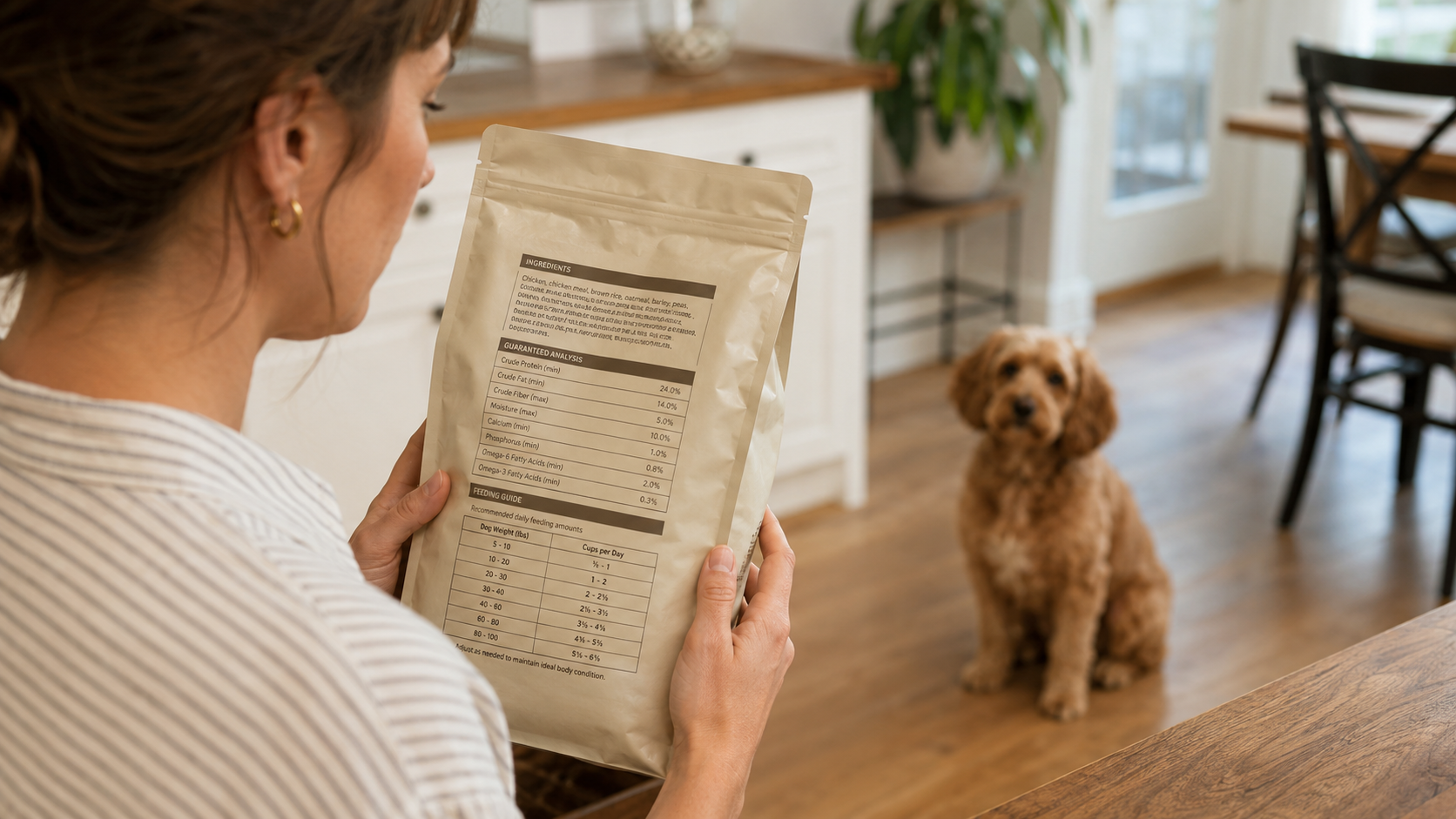
The ingredient list can help identify whether a product is grain-free or grain-inclusive, but it should be interpreted carefully.
Ingredients are generally listed by weight before processing. The first ingredients therefore contributed the greatest weight to the original recipe, but moisture content can affect their position.
For example, fresh meat contains considerable water, while dried meals, grains and protein concentrates contain less moisture. This makes direct comparisons difficult.
When reading a grain-free formula, check whether several related ingredients appear separately, such as:
- Peas
- Pea protein
- Pea starch
- Pea fibre
When reading a grain-inclusive formula, identify:
- Which grains are used
- Whether they are whole, refined or processed
- What protein sources are included
- How the food fits the dog’s life stage
- Whether the product is complete and balanced
Do not select a food solely because one preferred ingredient appears first.
Questions to Ask Before Choosing Grain-Free Dog Food
Before buying a grain-free formula, ask:
- Why does my dog need a grain-free diet?
- Has a veterinarian identified a specific sensitivity?
- What ingredients replace the grains?
- Are peas, lentils or potatoes major ingredients?
- Is the product complete and balanced?
- Who formulated the food?
- How does the manufacturer verify nutritional adequacy?
- What quality-control systems are used?
- Is the formula appropriate for my dog’s life stage?
- Does my dog maintain good health and body condition on the product?
If the only answer is that grain-free sounds more natural or premium, that is not enough information to make a nutritional decision.
Questions to Ask Before Choosing Grain-Inclusive Dog Food
Before choosing a grain-inclusive formula, ask:
- Which grains are used?
- Are they properly processed for digestibility?
- Does the formula provide suitable protein and fat?
- Is the food complete and balanced?
- Is it appropriate for the dog’s age and activity level?
- Is the calorie density suitable?
- Does the manufacturer maintain strong quality controls?
- Does the dog tolerate the ingredients?
Grain-inclusive should not be chosen merely because it is traditional. It should be selected because the complete formula meets the dog’s needs.
How to Change Your Dog’s Food Safely
Whether moving from grain-free to grain-inclusive food or in the opposite direction, make the change gradually unless a veterinarian provides different instructions.
A gradual transition may look like this:
- Days 1–2: 75% current food and 25% new food
- Days 3–4: 50% current food and 50% new food
- Days 5–6: 25% current food and 75% new food
- Day 7 onward: 100% new food
Some dogs may need a longer transition.
Monitor stool quality, appetite, vomiting, itching and overall comfort. Contact a veterinarian when symptoms are severe, persistent or accompanied by changes in energy, breathing or body weight.
The Bridge PetCare Approach

At Bridge PetCare, we believe there is no responsible basis for declaring every grain-free or every grain-inclusive product superior.
Both approaches can be used to develop pet foods. Their value depends on:
- Nutritional purpose
- Ingredient selection
- Formulation expertise
- Digestibility
- Species and life-stage suitability
- Manufacturing consistency
- Product safety
- Quality control
- Traceability
- The needs of the individual dog
Our objective is to connect nutritional knowledge, responsible ingredient selection and professional manufacturing to create products that respond to different pets, consumers and markets.
Learn more about Our Story, Our Philosophy, International Certification, Our Brands and the Bridge PetCare Factory.
Final Answer: Grain-Free or Grain-Inclusive?
For most dogs, the decision should not be based only on whether grains appear in the ingredient list.
A good dog food should be:
- Complete and balanced
- Appropriate for the dog’s life stage
- Produced by a responsible manufacturer
- Supported by nutritional expertise
- Safely and consistently manufactured
- Suitable for the individual animal
- Properly portioned
- Well tolerated
Grain-free dog food may be suitable when the complete formula is nutritionally appropriate or when there is a legitimate reason to avoid a specific grain.
Grain-inclusive food may be suitable for dogs that digest grains normally and can benefit from the energy, fibre and nutrients those ingredients provide.
Neither label is a guarantee of quality.
The best decision comes from evaluating the complete product, understanding the manufacturer and considering the individual needs of the dog. Owners should consult a veterinarian when their dog has allergies, chronic digestive problems, heart disease or other medical conditions.
Bridge PetCare — Better Choices Begin With Better Nutritional Understanding.