
Raw, Home-Cooked or Commercial Pet Food: How to Choose the Right Diet for Your Pet
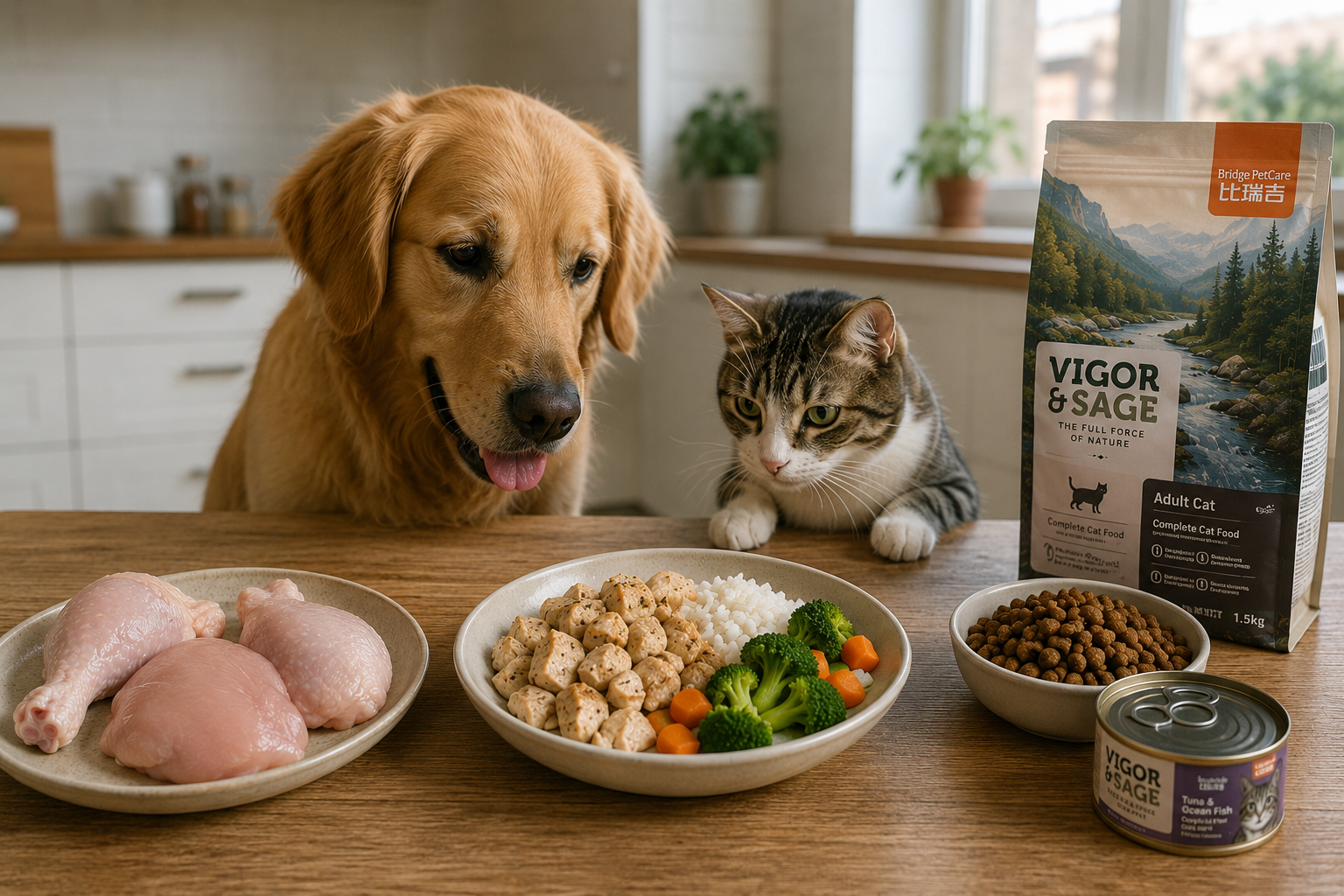
Learning how to choose pet food can be confusing. Some pet owners prefer raw chicken, beef, organs, or bones. Others prepare cooked meals using ingredients such as chicken, rice, vegetables, and eggs. Many families choose professionally manufactured dry or wet pet food because it is practical and designed for everyday feeding.
Each option may appear attractive for different reasons. Raw food may seem natural. Home-cooked food gives owners control over the ingredients. Commercial food offers convenience, consistency, and formulas created for different species and life stages.
However, the best diet is not determined simply by whether the food is raw, homemade, or manufactured in a factory.
The most important questions are:
- Is the food safe?
- Is it nutritionally complete and balanced?
- Is it appropriate for a dog or a cat?
- Does it match the animal’s life stage?
- Can it be fed consistently?
- Does the pet digest and tolerate it well?
- Is the diet supported by professional nutritional expertise?
At Bridge PetCare, we believe that responsible feeding decisions should be based on safety, nutritional balance, transparency, and the individual needs of the animal.
There Is No Universal Diet for Every Pet
Dogs and cats have different nutritional requirements. A puppy, an adult dog, a kitten, a senior cat, and a working animal should not automatically receive the same type or quantity of food.
Factors that can influence the appropriate diet include:
- Species
- Age and life stage
- Breed and body size
- Activity level
- Body condition
- Reproductive status
- Digestive sensitivity
- Medical conditions
- Food tolerance
- Lifestyle
- The owner’s ability to prepare and store food safely
The goal is not to identify one feeding style as perfect for every animal. The goal is to select a diet that provides the correct nutrients in appropriate amounts and proportions.
WSAVA recommends feeding a complete and balanced diet appropriate for the animal’s species and life stage and evaluating the company’s nutritional expertise and quality-control practices. (wsava.org)
Option 1: Raw Pet Food
Raw diets may contain uncooked:
- Chicken
- Beef
- Lamb
- Fish
- Organs
- Eggs
- Bones
- Fruits and vegetables
These diets may be prepared at home or purchased as frozen, refrigerated, or freeze-dried commercial products.
Supporters of raw feeding often say that it is more natural, less processed, or closer to the ancestral diet of dogs and cats. However, “natural” does not automatically mean safe, complete, or appropriate.
The Main Concern: Food Safety
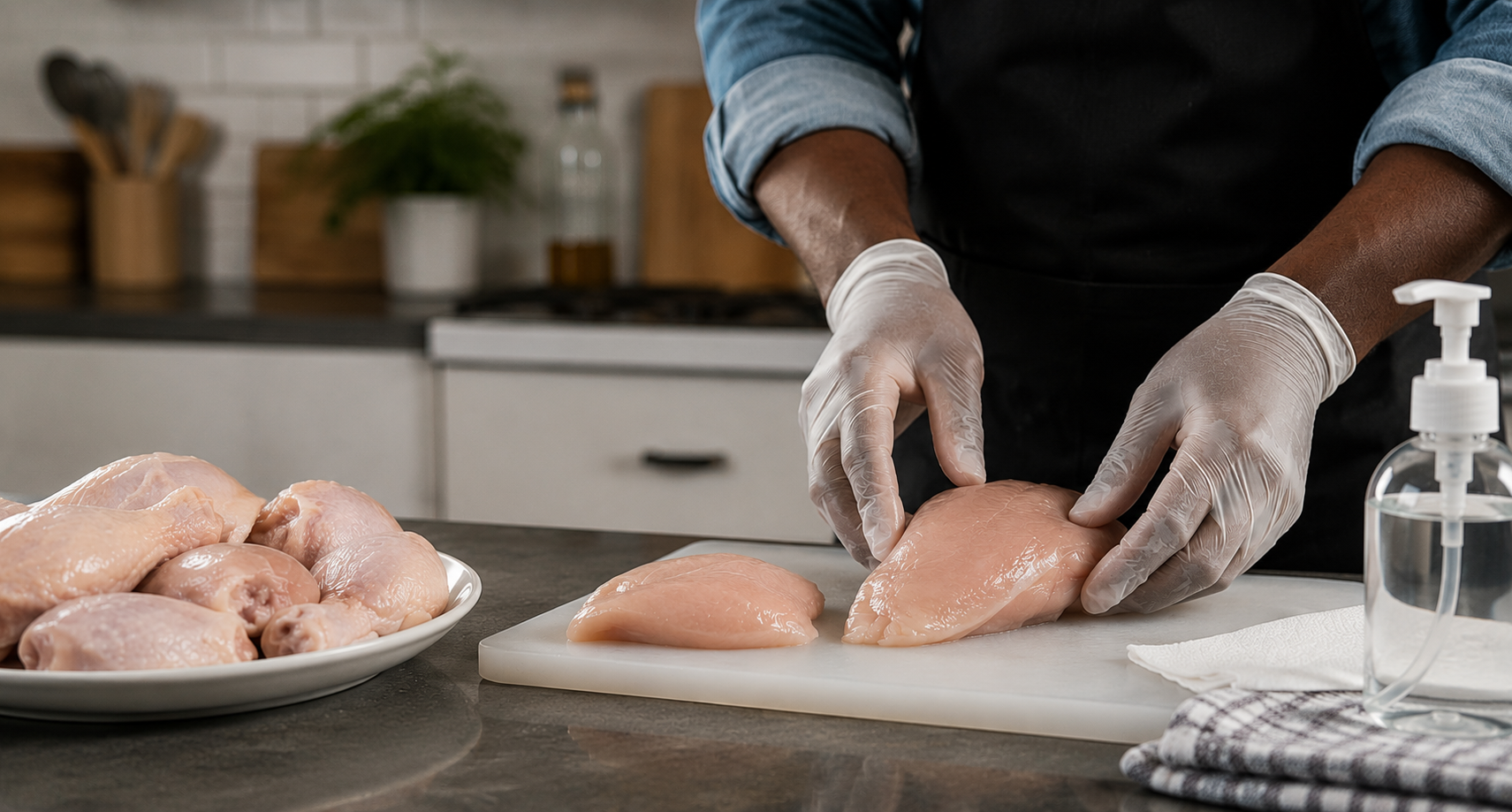
Raw animal ingredients can carry harmful microorganisms. The CDC states that raw pet food and treats can make dogs and cats sick and does not recommend feeding raw food to pets. The FDA also warns that raw diets can expose animals and people to organisms such as Salmonella and Listeria monocytogenes. (U.S. Food and Drug Administration)
Contaminated food can also spread microorganisms to:
- Human hands
- Food-preparation surfaces
- Refrigerators
- Pet bowls
- Floors
- Furniture
- Other animals
- Children or vulnerable family members
Pets do not necessarily need to appear sick to spread microorganisms into their environment.
Extra caution is particularly important in homes with:
- Young children
- Older adults
- Pregnant people
- Immunocompromised individuals
- People undergoing medical treatment
- Other medically vulnerable family members
Raw Chicken Is Not a Complete Diet
A piece of raw chicken provides protein, fat, water, and several nutrients. It does not automatically provide every vitamin, mineral, fatty acid, and amino acid a dog or cat requires in the correct proportions.
Adding rice, vegetables, bones, or organs without professional formulation does not guarantee nutritional balance.
The main issue is therefore not whether chicken is a good ingredient. Chicken can be a valuable ingredient. The issue is whether the complete diet provides all required nutrients safely and consistently.
Bones Require Special Consideration
Bones may create additional risks, including damage to teeth, choking, digestive obstruction, or gastrointestinal injury. A pet owner should not assume that raw bones are safe simply because animals can chew them.
Owners considering any raw or bone-based diet should first discuss the plan with a veterinarian or qualified veterinary nutrition professional.
Option 2: Home-Cooked Pet Food
A home-cooked diet may include ingredients such as:
- Cooked chicken
- Beef
- Fish
- Rice
- Potatoes
- Sweet potatoes
- Oats
- Eggs
- Vegetables
- Oils
- Vitamin and mineral supplements
Home cooking can offer greater control over ingredient selection. It may also be useful when a veterinarian recommends a carefully formulated diet for a particular animal.
However, cooking food at home does not automatically make it complete and balanced.
Is Cooked Chicken and Rice a Complete Pet Food?
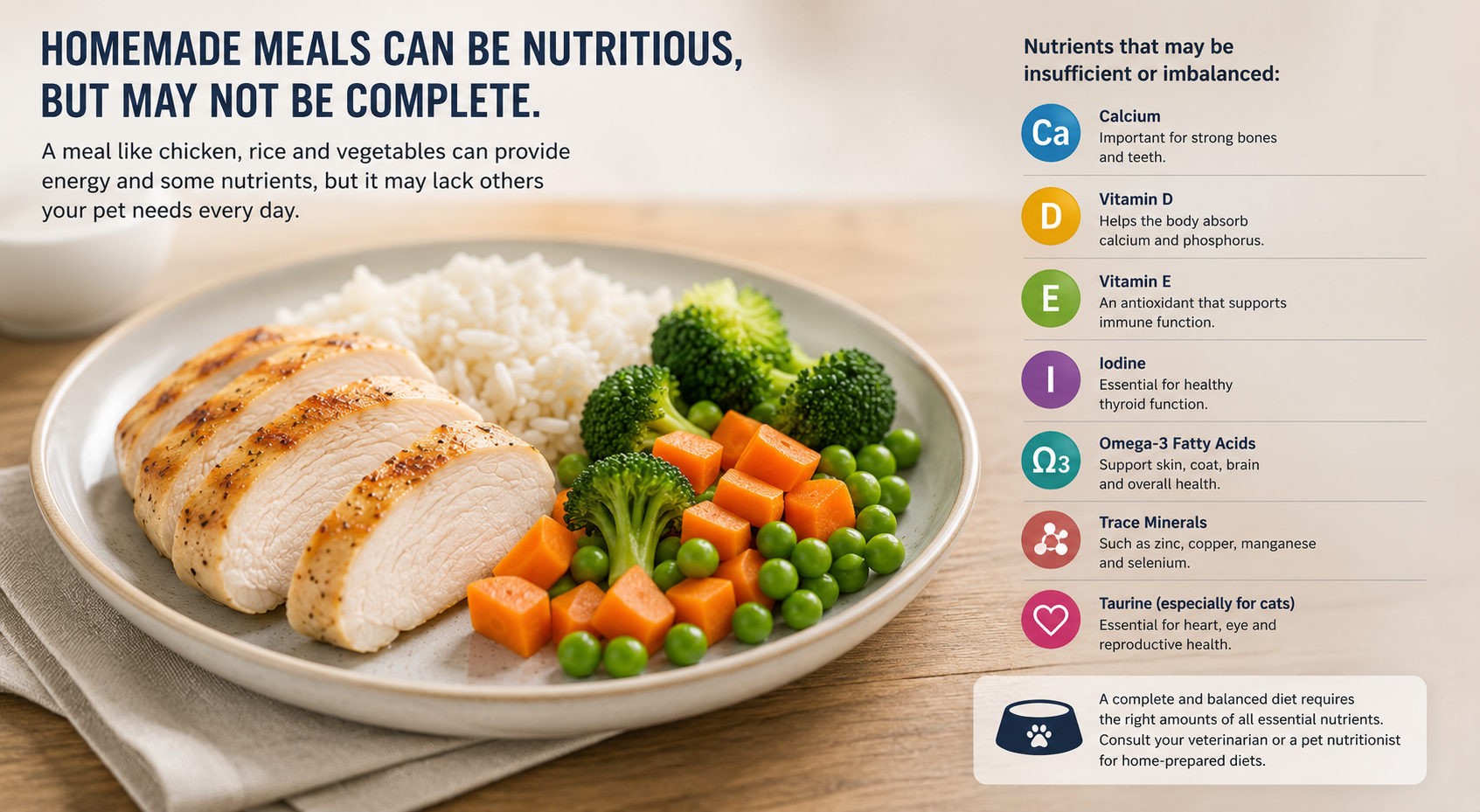
Cooked chicken and rice is commonly associated with simple feeding or temporary digestive support. However, chicken and rice alone should not be assumed to provide complete long-term nutrition.
A complete diet must supply appropriate amounts and proportions of:
- Protein and essential amino acids
- Fat and essential fatty acids
- Calcium
- Phosphorus
- Vitamins
- Trace minerals
- Species-specific nutrients
Cats, for example, have particular nutritional requirements that cannot be met by simply combining chicken and rice.
A meal can look fresh, clean, and nutritious while still being deficient or imbalanced.
AAFCO defines “complete” as containing all required nutrients and “balanced” as providing those nutrients in the correct ratios. (AAFCO)
Common Problems With Improvised Homemade Diets
An unformulated homemade diet may contain:
- Too much meat and insufficient calcium
- An incorrect calcium-to-phosphorus balance
- Inadequate vitamins or trace minerals
- Too little or too much fat
- Insufficient essential fatty acids
- Inadequate taurine for cats
- Excessive calories
- Ingredients that are unsafe for pets
- Nutrient levels that change from one meal to another
These problems may not produce immediate visible symptoms. A pet can enjoy the food and maintain an appetite while still receiving an inadequate nutritional profile.
When Home-Cooked Food Can Be Appropriate
A home-cooked diet can be a valid option when:
- The recipe is formulated for the individual animal.
- The recipe comes from a qualified veterinary nutrition professional.
- Ingredients are weighed accurately.
- Required supplements are included.
- The owner follows the recipe consistently.
- The animal’s weight and health are monitored.
- The recipe is reviewed when the animal’s needs change.
The phrase home-cooked describes where the food is prepared. It does not prove nutritional adequacy.
Option 3: Commercial Pet Food Made in a Factory
Commercial pet food includes:
- Dry kibble
- Wet food
- Canned food
- Pouches
- Baked food
- Air-dried food
- Freeze-dried food
- Veterinary or specialized formulas
A professionally manufactured food can offer several advantages, including consistency, convenience, defined feeding instructions, traceability, quality-control systems, and formulas designed for specific species and life stages.
However, the fact that a product was produced in a factory does not automatically make it high quality.
Pet owners must still evaluate the product and the manufacturer.
What to Look for in Commercial Pet Food
1. Complete and Balanced Nutrition
Check whether the label states that the food is complete and balanced for the appropriate:
- Species
- Life stage
- Growth period
- Adult maintenance
- Gestation or lactation
- All life stages
The nutritional adequacy statement is one of the most important parts of a commercial pet food label because it explains whether the product is intended as a complete diet or only for supplemental or intermittent feeding. (AAFCO)
2. Clear Intended Use
Confirm whether the product is:
- A complete daily food
- A treat
- A topper
- A complementary food
- A supplement
- A product for intermittent feeding
A pouch, can, freeze-dried product, or attractive meat-based food should not automatically be treated as a complete daily diet.
3. Appropriate Life Stage
Food for puppies and kittens may require a different nutrient concentration from food designed for adult maintenance.
Senior animals, active pets, large breeds, and animals with medical conditions may also require a more individualized evaluation.
4. Manufacturer Expertise
Responsible manufacturers should be able to explain:
- Who formulates their products
- How ingredients are evaluated
- How formulas are tested
- How production is controlled
- How safety is monitored
- How products are traced
- What quality systems the factory uses
- How customers can contact the company
5. Quality Control and Traceability

Factory production can provide structured systems for:
- Raw-material inspections
- Controlled processing
- Temperature management
- Microbiological testing
- Nutrient analysis
- Batch identification
- Packaging control
- Storage management
- Product traceability
These systems matter because nutritional quality depends not only on the recipe but also on whether the product can be produced safely and consistently.
Does Processing Make Pet Food Unhealthy?
Processing is often presented as automatically negative. That is an oversimplification.
Cooking and controlled processing can perform important functions, including:
- Reducing microbial risks
- Improving the digestibility of certain ingredients
- Creating a stable product
- Protecting the food during storage
- Allowing ingredients to be combined consistently
- Producing defined portions and feeding instructions
The right question is not simply, “Is this food processed?”
The better questions are:
- Why was it processed?
- How was it processed?
- Is the final product safe?
- Is it nutritionally appropriate?
- Does the manufacturer maintain consistent controls?
- Is the food suitable for the individual pet?
Raw, Homemade or Commercial: Which Is Best?
There is no responsible answer based only on the category.
A raw diet may offer:
- High palatability
- Control over selected ingredients
- Different textures
- Minimal cooking
But it may also involve:
- Microbiological hazards
- Cross-contamination
- Nutritional imbalance
- Storage challenges
- Bone-related risks
- Inconsistent preparation
A home-cooked diet may offer:
- Ingredient control
- Fresh preparation
- Customization
- Flexibility
But it may also involve:
- Nutritional deficiencies
- Incorrect mineral balance
- Preparation time
- Higher cost
- Recipe inconsistency
- Dependence on supplements
- Difficulty maintaining the exact formulation
Commercial pet food may offer:
- Nutritional formulation
- Convenience
- Consistency
- Feeding instructions
- Quality-control systems
- Traceability
- Different life-stage options
- Easier storage
But product quality still depends on:
- The manufacturer
- The formula
- Ingredient controls
- Nutritional expertise
- Production systems
- Transparency
- The suitability of the product for the individual animal
How to Choose Pet Food: A Practical Checklist
Before selecting a diet, ask the following questions.
Nutritional Adequacy
- Is the food complete and balanced?
- Is it intended for dogs or cats?
- Is it appropriate for the animal’s life stage?
- Is it a main food or only a treat or supplement?
Safety
- Are ingredients stored and handled safely?
- Does the preparation method control microbial risks?
- Is there a traceability system?
- Can the manufacturer identify individual batches?
- Are storage instructions provided?
Individual Suitability
- Does the pet maintain a healthy body condition?
- Is digestion consistent?
- Is stool quality normal?
- Does the pet maintain healthy skin and coat?
- Is the calorie intake appropriate?
- Does the animal have a medical condition?
Practicality
- Can the diet be prepared or purchased consistently?
- Can the owner follow the feeding instructions accurately?
- Can the food be stored safely?
- Is the cost sustainable?
- Is professional nutritional support available?
Avoid Choosing Food Based Only on Marketing
Terms such as the following can influence consumer decisions:
- Natural
- Raw
- Fresh
- Premium
- Holistic
- Human-grade
- Homemade
- High protein
- Grain-free
- Minimally processed
These terms do not independently demonstrate that a food is safe, complete, balanced, digestible, or appropriate.
A bowl containing recognizable chicken and rice may look more natural than kibble, but appearance does not reveal its calcium, phosphorus, taurine, vitamin, mineral, or essential fatty-acid content.
Similarly, attractive factory packaging does not prove nutritional quality.
Pet owners should evaluate the full nutritional and manufacturing system behind the product.
The Bridge PetCare Approach
At Bridge PetCare, we believe that responsible pet nutrition requires more than choosing fashionable ingredients.
It requires a coordinated approach involving:
- Nutritional formulation
- Carefully selected ingredients
- Species-appropriate nutrition
- Life-stage suitability
- Manufacturing consistency
- Product safety
- Quality-control systems
- Traceability
- Clear labeling
- Practical feeding guidance
Our objective is to connect nutritional knowledge with reliable manufacturing and products designed for the real needs of pets and their families.
Visitors can learn more about our company through Our Story, Our Philosophy, International Certification, Our Brands, and the Bridge PetCare Factory.
Final Answer: What Should You Feed Your Pet?
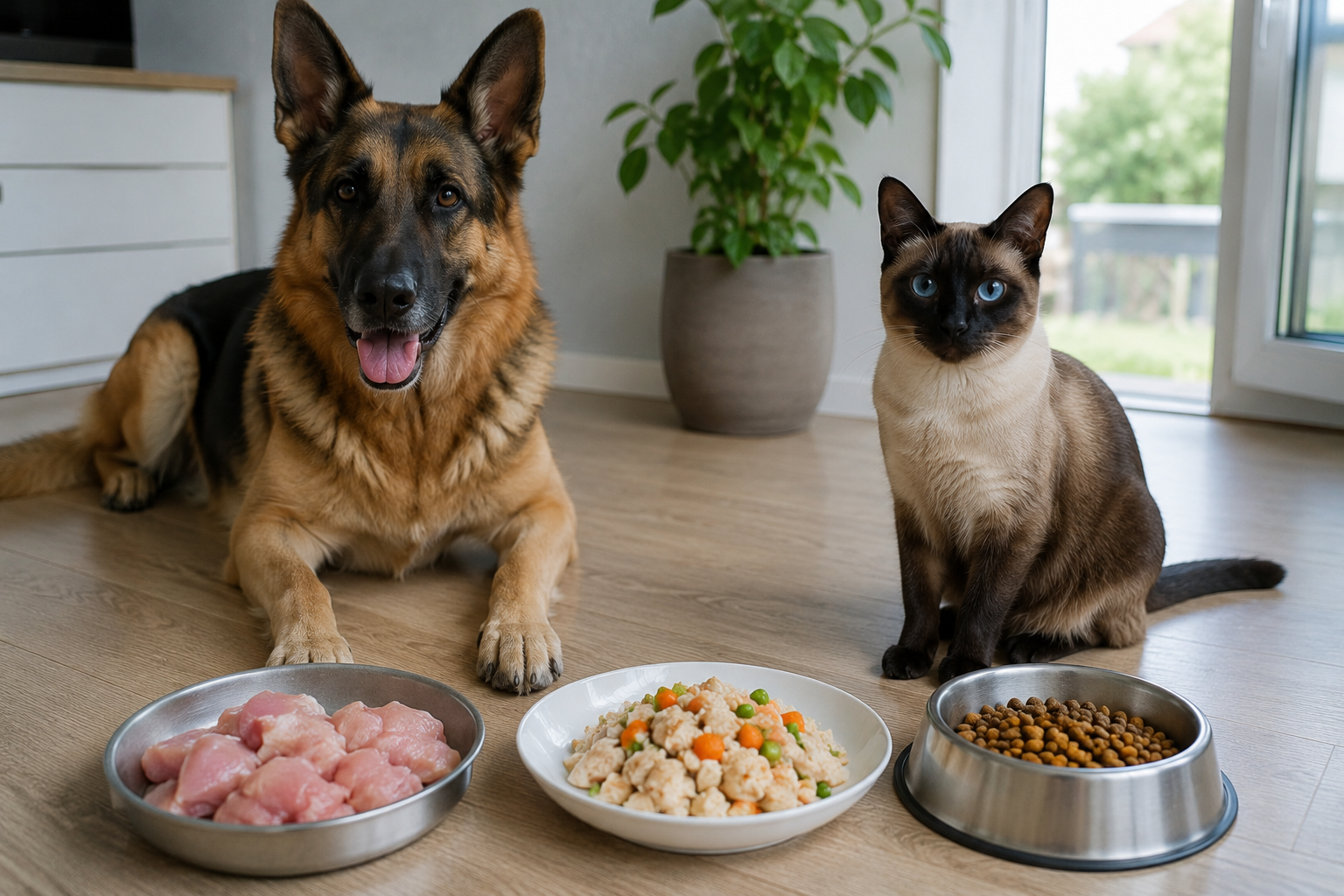
Raw chicken is not automatically healthier because it is natural. Cooked chicken and rice is not automatically complete because it is prepared at home. Commercial food is not automatically superior simply because it is manufactured in a factory.
The best everyday diet should be:
- Safe
- Complete and balanced
- Appropriate for the species
- Suitable for the animal’s life stage
- Consistent
- Digestible
- Practical
- Supported by reliable nutritional expertise
For most pet owners, a properly selected complete commercial food provides a practical way to deliver consistent daily nutrition. A professionally formulated home-cooked diet may also be appropriate for some animals and families.
Raw feeding presents additional safety concerns and should not be started without understanding the risks and obtaining professional guidance. Current CDC and FDA guidance warns about the microbial risks associated with raw pet food. (U.S. Food and Drug Administration)
Pet owners should consult a veterinarian or qualified veterinary nutrition professional before beginning a raw diet, using an improvised homemade diet as the primary food, or changing the diet of an animal with medical or digestive problems.
Bridge PetCare — Responsible Nutrition Begins With Informed Choices.